E-commerce Design
Shopify & WooCommerce stores that sell
We design online stores around how people actually decide to buy — which is rarely as linear as a checkout funnel suggests. Trust is built before the product page. Intent is shaped by how collections are browsed. Checkout abandonment is usually a symptom of friction thirty seconds earlier. We design from those realities: Shopify and WooCommerce storefronts where product pages earn trust, flows remove friction, and the post-purchase experience turns one-time buyers into customers who come back. We've built stores for single-product DTC brands, multi-tier B2B catalogues, and everything in between.
What's included
- Buyer persona & purchase journey mapping
- Store architecture & navigation design
- Full Figma design for all key page templates
- Shopify or WooCommerce build
- Product page trust signal & social proof design
- Cart & checkout flow optimisation
- Post-purchase & transactional email flows
- Analytics setup & post-launch performance monitoring
How it works
- 01
Buyer Research
We map who's buying — their intent, their anxieties, and the moments where trust is made or broken. A homeowner buying a gift and a procurement manager buying in bulk are entirely different journeys, and both need to work.
- 02
Architecture Strategy
Navigation, collection structure, filtering logic, and cross-sell strategy defined before a single screen is designed. We structure from buyer intent, not from how the SKU database is organised.
- 03
Visual Design
High-fidelity Figma design for every key template: home, collection, product, cart, checkout, and post-purchase. Trust signals, social proof, and urgency mechanics are designed in from the start — never bolted on as afterthoughts.
- 04
Build & Integration
A clean Shopify or WooCommerce build with a CMS your team can operate without a developer. Performance and Core Web Vitals are part of the build spec — not an afterthought that requires a separate engagement.
- 05
Launch & Optimise
We wire up transactional and post-purchase email flows, confirm analytics and pixel tracking, and monitor the first week of purchase behaviour to catch any friction before it compounds.
What you get
- A storefront that earns trust before visitors reach the product page
- Higher add-to-cart and checkout completion rates
- Distinct, clean purchase journeys for B2C and B2B buyers where needed
- Post-purchase flows that generate repeat revenue automatically
- A store your team operates and updates without developer involvement
Related work

Frequently asked
Shopify or WooCommerce — which is better?
Shopify wins for speed to market, reliability, and a clean ecosystem — ideal for most DTC brands. WooCommerce wins when you need deep WordPress flexibility, specific plugins, or tight integration with an existing site. We recommend honestly based on your catalogue and team, not our preference.
Can you handle both B2C and B2B buyers in the same store?
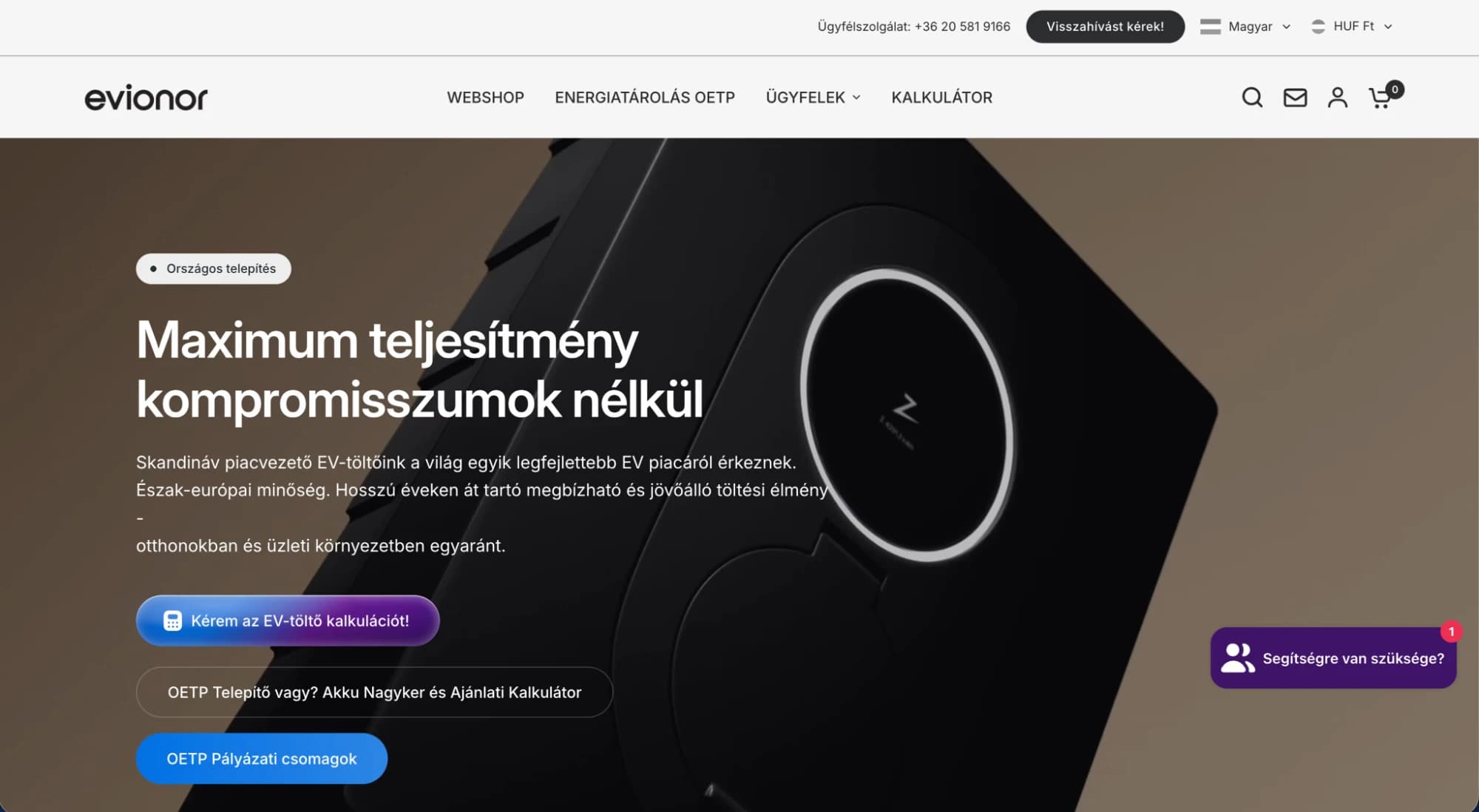
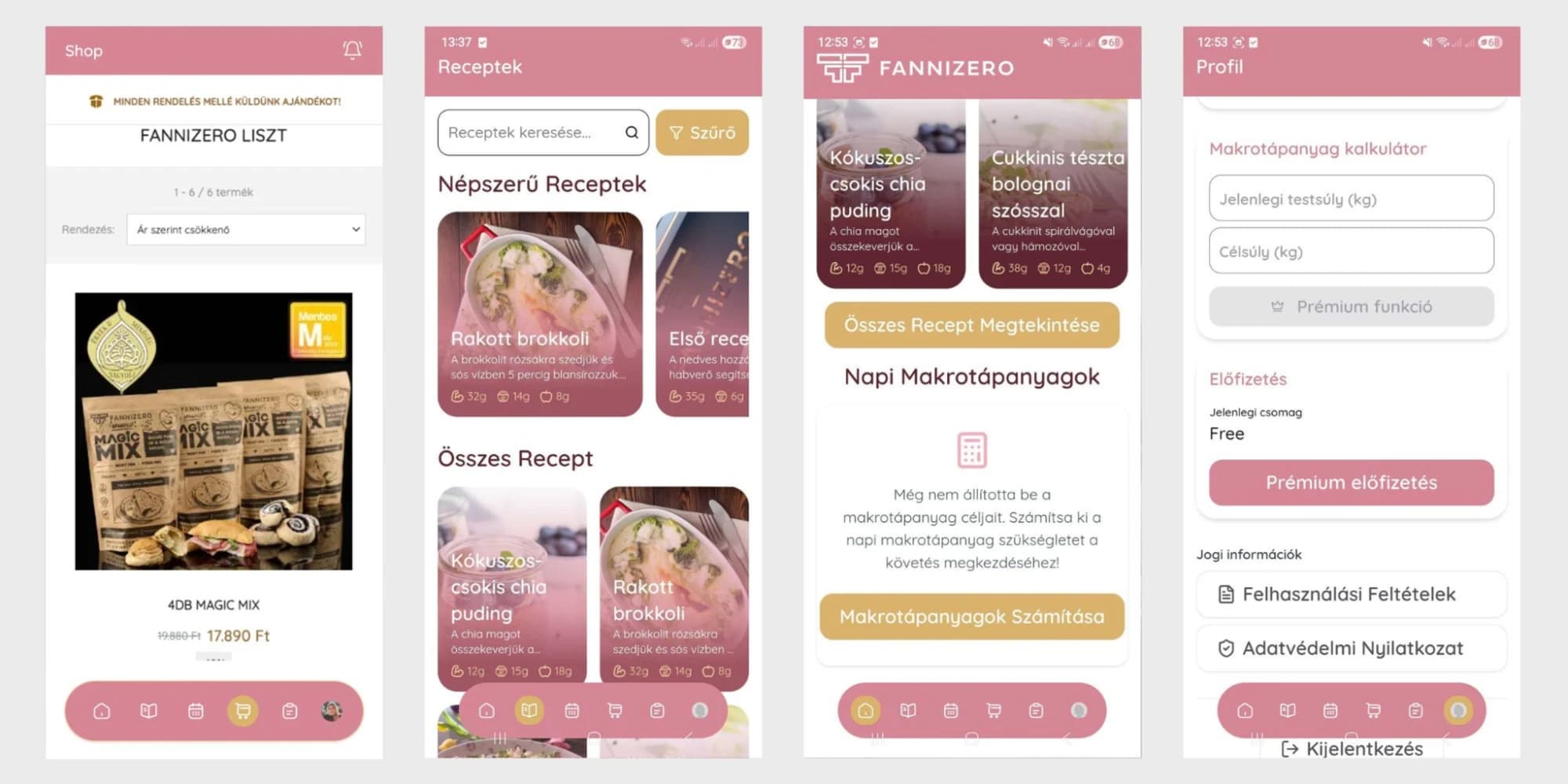
Yes. We designed Evionor and Ajándékbár around multiple buyer types — keeping each journey clean and specific while the back end stays unified. It requires careful architecture, but it's entirely manageable.
Do you set up the post-purchase email flows too?
Yes. On-brand transactional emails, post-purchase sequences, and review request flows are part of how a store earns repeat customers — we include them in every e-commerce project.
What about product photography and copy?
We design around your existing assets and clearly flag what's missing or underselling the product. If you need photography direction or copywriting, we can coordinate that work — but the design doesn't wait for it.
Can you optimise an existing store rather than rebuild it?
Often, yes. We run a conversion audit first to identify the specific pages and flows with the biggest impact. Improvements are surgical and prioritised — we don't recommend a full rebuild when three focused changes would move the needle faster.
next service →
Design Systems
Component libraries that scale