Verdatherm
Green energy solutions, presented with the confidence the category needs
- Webflow
- Green Energy
- B2B
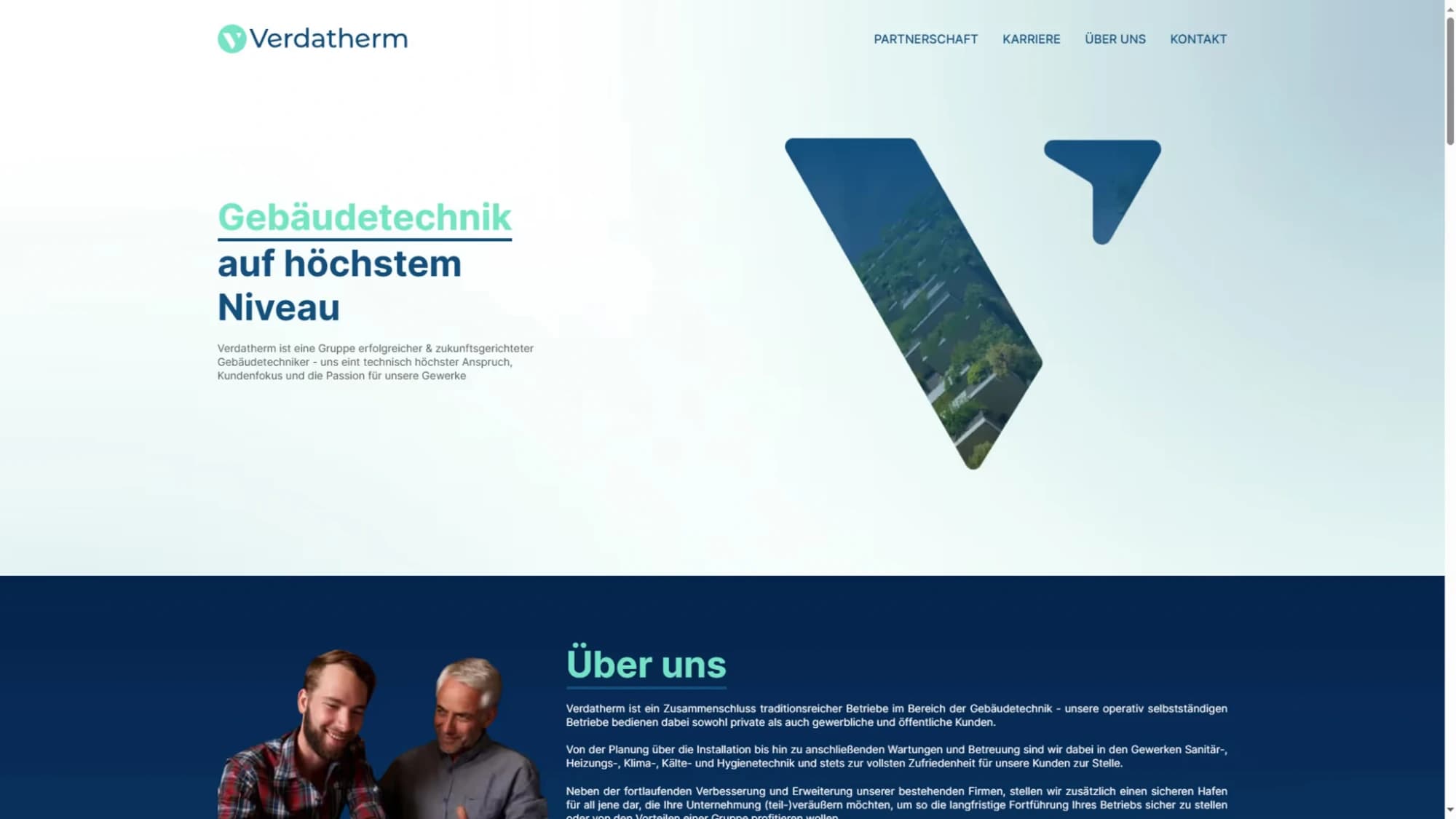
Overview
Verdatherm, a sustainable heating and thermal-energy company, needed a refined digital presence that avoided common eco-branding pitfalls — leaf icons, solar-panel stock photos, aggressive greens — to stand out authentically.
The challenge
Green energy brands struggle with credibility: too much eco-branding suggests greenwashing, while too little buries the sustainability advantage. The challenge was a visual and editorial tone that felt genuinely sustainable without performative signaling.
The solution
A restrained, intelligent approach that communicates environmental values through design quality itself. Natural palettes, precise typography, and technology-focused photography replace typical nature imagery. Technical pages serve experts; clear benefit structures orient newcomers. Built on Webflow with CMS capabilities.
Outcome
- Distinctive, credible positioning above industry greenwashing
- Appeals to environmentally and technically motivated audiences
- Webflow CMS for client-managed content and blogging
- Local SEO integrated into the page structure
User Journey Analysis
Actor: Homeowner evaluating sustainable heating options
Researching heat pumps — overwhelmed by greenwashing copy and technical jargon
Design restraint signals credibility — precision reads as honest where visual boldness reads as greenwashing
Verdatherm site: precise, technology-focused design — stands apart from competitors
Engineering photography replaced nature photography — sustainability communicated through precision
Reads product specs — level of detail matches their research stage perfectly
Content segmented for two audiences: overview for newcomers, specs for the already-convinced
Finds CO₂ savings data and third-party energy efficiency certifications
Performance data cited from third-party sources — not self-reported claims
Requests a site survey — clear next step, no pricing anxiety
No pricing on site (project-specific) — enquiry framed as 'let us assess your home', not a sales call
UX Artifacts
Anti-Greenwashing Design Checklist
- Imagery
- No leaf or tree iconography — replaced with engineering and technology visuals
- Environmental claims
- All claims cite specific certifications or third-party data sources
- Performance data
- Product efficiency ratings shown alongside sustainability claims
- Tone
- Analytical and precise — not evangelical, trend-chasing, or virtue-signalling
- Copy rule
- No 'eco-friendly' or 'green' without substantiation directly following
- Design quality
- Consistency and precision signal seriousness — appropriate to a premium product
Three-Audience Content Segmentation
- Segment A — Environmentally motivated
- Benefits-first, plain language, outcome focus
- Segment B — Technically motivated
- Product specs, certifications, efficiency ratings depth
- Segment C — Cost-motivated
- Energy bill reduction, payback period, available grants
- Navigation
- All three paths available from homepage — no visitor forced into one journey
- Content depth
- Accordion pattern — each audience self-selects without scrolling past irrelevant content
next frame →
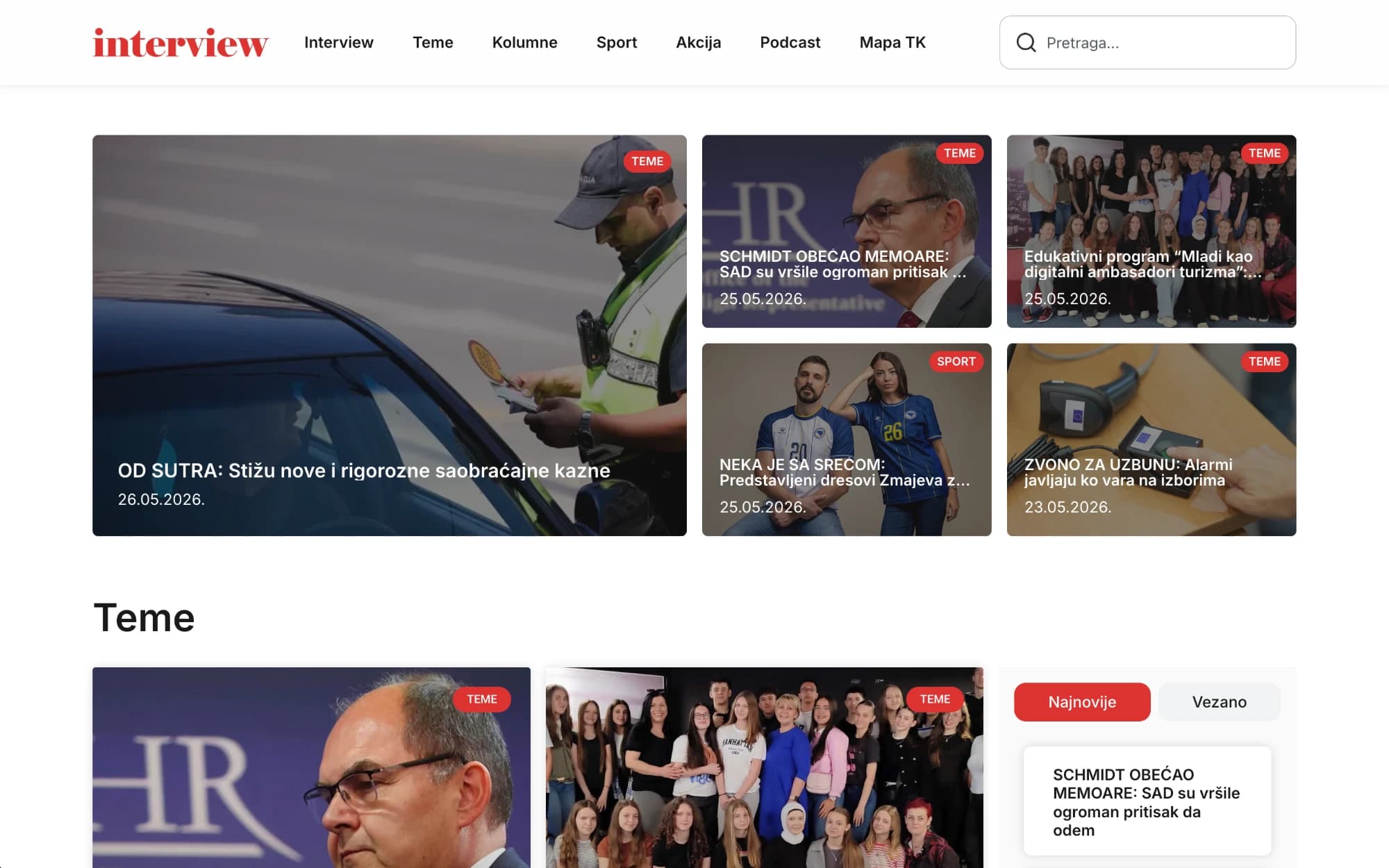
Interview.ba
An independent news portal built to handle serious journalism at scale